戰機世代怎麼分?解析4、5、6代戰機真正差異
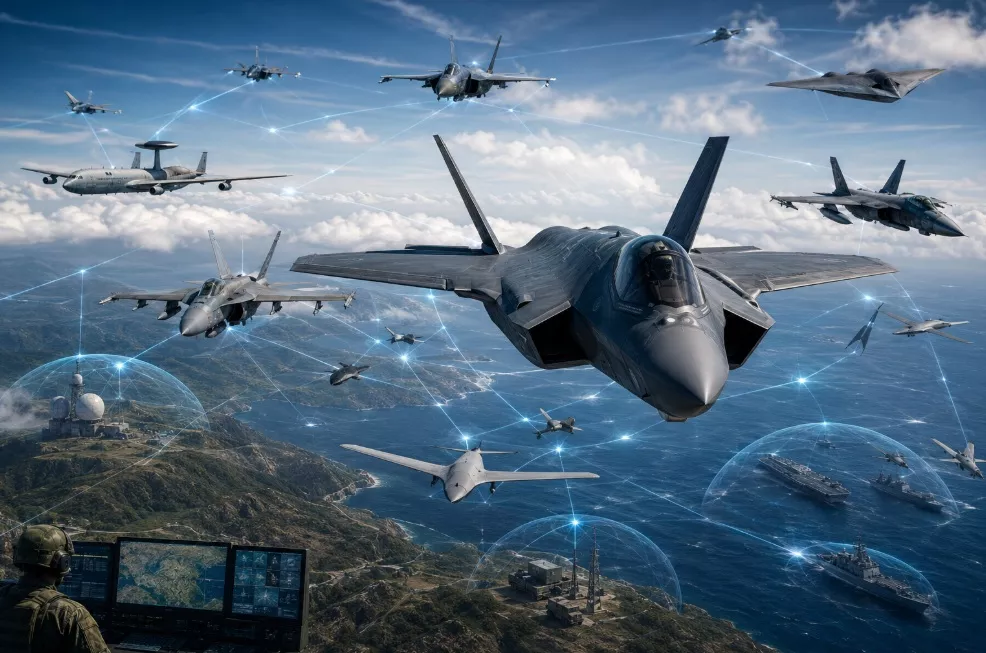
匿蹤、AI與體系作戰成關鍵
世代標籤不只是技術分類 更涉及戰略與軍工宣傳
「第4代」、「第5代」甚至「第6代」戰機,近年已成全球軍事新聞與軍購討論熱門名詞。不過,相關分類其實並非正式國際標準,而是結合歷史、技術演進、軍事 doctrine(作戰思想)與軍工行銷逐漸形成的概念。
The terms “4th-generation,” “5th-generation,” and even “6th-generation” fighters have become central to global military discourse. However, these labels are not official international standards. Instead, they evolved from a mix of aviation history, military doctrine, technological progress, and defense-industry marketing.
戰機世代概念起源
美航空史學家1990年提出初步分類
戰機世代分類概念,最早由美國航空史學家 Richard P. Hallion 於1990年提出。他當時依據性能與技術演進,將噴射戰機區分為:
- 次音速
- 穿音速
- 超音速
- 2倍音速
- 多用途
- 高機動性
等不同世代。
The concept of fighter generations was first proposed in 1990 by aviation historian Richard P. Hallion. He categorized fighters according to performance and technological evolution, including subsonic, transonic, supersonic, Mach 2-capable, multirole, and high-maneuverability aircraft.
F-22催生「第5代戰機」概念
真正讓「第5代戰機」概念廣泛普及的,則是 F-22 Raptor 計畫。
美國當時以「全球首款第5代戰機」作為核心宣傳,除凸顯技術優勢,也藉此向國會合理化龐大研發預算。
The widespread adoption of the “5th-generation fighter” label came with the F-22 Raptor program. The United States promoted the aircraft as the world’s first 5th-generation fighter to emphasize its revolutionary capabilities and justify its massive development costs to Congress.
第一代至第三代戰機
噴射時代初期的快速演進
第一代戰機
噴射化但仍接近二戰思維
第一代戰機大約出現在1940年代末至1950年代初,特徵包括:
- 初代噴射引擎
- 幾乎沒有雷達
- 以機炮為主武裝
- 採直翼或小後掠翼
代表機型包括:
- Messerschmitt Me 262
- Gloster Meteor
- F-86 Sabre
- MiG-15
First-generation fighters emerged in the late 1940s and early 1950s. They featured primitive jet engines, little or no radar capability, gun-based armament, and straight or mildly swept wings.
Representative aircraft included the Messerschmitt Me 262, Gloster Meteor, F-86 Sabre, and MiG-15.
第二代戰機
進入超音速與飛彈時代
第二代戰機大約出現在1950年代中後期至1960年代初期,開始具備:
- 超音速飛行能力
- 空對空雷達
- 紅外線飛彈
- 攔截核轟炸機任務
代表機型包括:
- MiG-21
- Dassault Mirage III
- Lockheed F-104 Starfighter
Second-generation fighters introduced supersonic flight, early air-to-air radar, infrared-guided missiles, and interceptor-oriented missions focused largely on stopping nuclear bombers.
Representative aircraft included the MiG-21, Dassault Mirage III, and Lockheed F-104 Starfighter.
第三代戰機
強化雷達與視距外作戰
第三代戰機於1960年代中後期至1970年代興起,開始強化:
- 雷達性能
- 半主動雷達導引飛彈
- 視距外空戰(BVR)
- 多用途作戰能力
其中最具代表性的機型為:
- F-4 Phantom II
Third-generation fighters improved radar systems, semi-active radar-guided missiles, and maneuverability. This era also saw the early rise of multirole combat capability and beyond-visual-range engagement concepts.
The most iconic aircraft of this generation was the F-4 Phantom II.
第四代戰機
現代空軍主力核心
第四代戰機至今仍是全球多數空軍主力,其核心技術包括:
- 線傳飛控(Fly-by-wire)
- 高機動性
- Pulse-Doppler雷達
- 多用途能力
- BVR作戰成熟化
代表機型包括:
- F-15 Eagle
- F-16 Fighting Falcon
- F/A-18 Hornet
- MiG-29
- Su-27
Fourth-generation fighters remain the backbone of most global air forces. Their defining features include fly-by-wire controls, high maneuverability, pulse-Doppler radars, mature BVR combat capability, and multirole flexibility.
Representative aircraft include the F-15 Eagle, F-16 Fighting Falcon, F/A-18 Hornet, MiG-29, and Su-27.
「4.5代戰機」概念興起
AESA雷達與電戰能力成升級重點
1990年代後,大量第四代戰機進行升級,因此衍生出「4.5代」或「4++代」等說法。
其主要升級包括:
- AESA主動相列雷達
- 先進電子戰系統
- 部分匿蹤設計
- 感測器融合
- 網路化作戰能力
代表機型包括:
- F-15EX Eagle II
- Dassault Rafale
- Eurofighter Typhoon
- Saab JAS 39 Gripen E
- Su-35
Since the 1990s, many 4th-generation fighters have undergone extensive modernization, giving rise to terms like “4.5-generation” and “4++ generation.”
Upgrades typically include AESA radars, advanced electronic warfare systems, limited stealth shaping, sensor fusion, and network-centric warfare capability.
Representative aircraft include the F-15EX Eagle II, Dassault Rafale, Eurofighter Typhoon, Saab JAS 39 Gripen E, and Su-35.
第五代戰機
匿蹤與「感測器融合」成核心
第五代戰機真正關鍵,其實不只是匿蹤,而是:
- 全頻譜感測器融合
- 網路化作戰
- 低可偵測性
- 高度資訊共享
- 生存性提升
代表機型包括:
- F-22 Raptor
- F-35 Lightning II
- Chengdu J-20
- Shenyang J-35
The defining feature of 5th-generation fighters is not simply stealth, but full-spectrum sensor fusion and network-centric warfare capability.
Representative aircraft include the F-22 Raptor, F-35 Lightning II, Chengdu J-20, and Shenyang J-35.
Su-57定位仍具爭議
Sukhoi Su-57 雖常被列入第五代戰機,但部分西方分析人士認為,其更接近「4++代」與「過渡型五代機」。
爭議包括:
- 匿蹤性能有限
- 感測器融合成熟度不足
- 缺乏完整網路化體系支援
The Sukhoi Su-57 is frequently listed as a 5th-generation fighter, but some Western analysts regard it as more of a transitional “4++ generation” design.
Criticism focuses on limited stealth performance, uncertain sensor fusion maturity, and the lack of a robust supporting network ecosystem.
第六代戰機
AI與無人僚機將成未來核心
目前第六代戰機概念仍在發展中,但普遍認為將具備:
- 全向匿蹤
- AI輔助決策
- 有人/無人協同作戰
- 超遠程感測器
- 自適應循環發動機
- 極高度網路化
代表計畫包括:
- Boeing F-47
- BAE Systems Tempest
- Future Combat Air System
- F/A-XX
Definitions for 6th-generation fighters are still evolving, but they are generally expected to feature all-aspect stealth, AI-assisted decision-making, manned-unmanned teaming, ultra-long-range sensing, adaptive engines, and extreme networking.
Programs commonly associated with the 6th-generation concept include the Boeing F-47, BAE Systems Tempest, Future Combat Air System, and F/A-XX.
現代空戰核心
「體系作戰」比單機性能更重要
分析指出,現代空戰勝負關鍵,已不再只是單一戰機性能,而是整體作戰體系。
例如:
- 預警機(AWACS)
- 衛星ISR
- 資料鏈
- 無人機
- 聯合作戰網路
都會直接影響戰機作戰效能。
Modern air combat is increasingly determined not by individual aircraft performance alone, but by the strength of the broader combat ecosystem.
Assets such as AWACS aircraft, satellite ISR, data links, unmanned systems, and integrated battle networks can dramatically enhance fighter effectiveness.
西方戰機強項在於「網路化生態系」
分析認為,即使 Sukhoi Su-57 在部分單機性能上具備優勢,但西方戰機更強大的地方,在於完整體系支援。
例如:
- F-15EX Eagle II 可不開啟自身雷達,即透過外部感測器獲得目標資訊並發射飛彈。
This means aircraft such as the F-15EX Eagle II may not even need to activate their own radar. Instead, they can launch missiles using targeting information provided by offboard sensors and allied platforms.
軍事觀察
「世代」只是參考 真正差異在整體作戰能力
專家指出,「戰機世代」有助理解航空科技演進,但並非絕對戰力標準。
真正影響空戰勝負的關鍵,仍包括:
- 指揮管制
- 感測器整合
- 電子戰
- 後勤
- 飛行員訓練
- 聯合作戰能力
Experts stress that fighter generations are useful for understanding technological evolution, but they are not absolute indicators of combat effectiveness.
Ultimately, air superiority depends on command and control, sensor integration, electronic warfare, logistics, pilot training, and the ability to operate within a larger combat network.
(本文參考Aerospace Golbal News-Fighter jet generations explained: What 4th, 5th and 6th gen really mean)



回應文章建議規則: