【無人僚機正式進入空戰】澳洲MQ-28A成功試射AIM-120 協同作戰鏈首度完整驗證
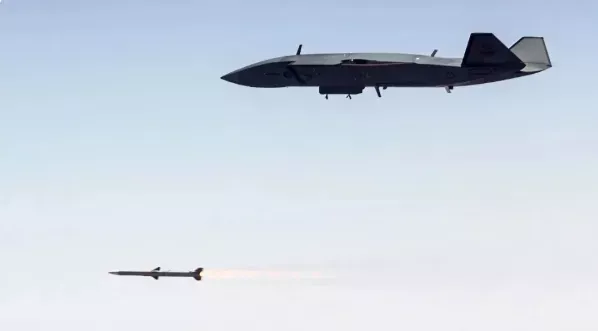
高度自主化無人僚機投入高端空戰,已不再停留於概念驗證階段。澳洲空軍近期完成一項關鍵測試,證實無人作戰飛行器已具備實際發射中程空對空飛彈、並納入體系化空戰的能力,象徵未來空戰樣貌正加速轉型。
The integration of highly autonomous loyal wingman drones into high-end air combat is no longer theoretical. A recent Australian Air Force test has confirmed that unmanned combat aircraft are now capable of firing medium-range air-to-air missiles as part of a fully networked air combat system, signaling a decisive shift in future air warfare.
無人機實彈擊殺「戰機級」目標 測試寫下新里程碑
Live-Fire Test Destroys Fighter-Class Target, Establishing a Major Milestone
2025年12月8日,波音防務澳洲分公司與澳洲皇家空軍合作,成功運用一架MQ-28A「幽靈蝙蝠」(Ghost Bat)無人機,實彈試射一枚AIM-120中程空對空飛彈,並成功摧毀一架具備戰鬥機機動性能的噴射靶機。
On December 8, 2025, Boeing Defence Australia and the Royal Australian Air Force conducted a successful live-fire test in which an MQ-28A “Ghost Bat” unmanned aircraft launched an AIM-120 medium-range air-to-air missile, destroying a jet-powered fighter-class target.
此一成果,標誌著MQ-28A「協同作戰飛機」(Collaborative Combat Aircraft, CCA)計畫,已從技術驗證階段,正式邁入具備實戰運用意義的關鍵門檻。
This achievement marks the MQ-28A Collaborative Combat Aircraft (CCA) program’s transition from experimental validation to a phase with clear operational relevance.
三機協同構成完整殺傷鏈 高度貼近實戰情境
Three-Aircraft Team Forms a Complete Kill Chain Under Realistic Conditions
此次測試並非單機射擊,而是構建高度貼近實戰的體系化空戰場景。參與單位包括1架掛載AIM-120的MQ-28A無人機、1架F/A-18F「超級大黃蜂」雙座戰機,以及1架E-7A「楔尾」空中預警機;由奎奈蒂克澳洲公司提供的「不死鳥」噴射靶機,則模擬敵方戰鬥機。
The test was conducted as a fully networked combat scenario rather than a standalone launch. Assets involved included one MQ-28A armed with an AIM-120 missile, an F/A-18F Super Hornet, and an E-7A Wedgetail airborne early warning aircraft, while a QinetiQ Australia “Phoenix” jet-powered target simulated an enemy fighter.
測試目的在於驗證MQ-28A能否作為網路化殺傷鏈中的關鍵節點,在高度對抗環境下,依賴體系支援完成武器運用。
The objective was to assess whether the MQ-28A could function as a critical node within a networked kill chain and effectively employ weapons under contested, high-fidelity operational conditions.
資料鏈共享目標資訊 預警機保有人類最終決策權
Data Sharing Enables Engagement While Human Control Is Retained
在測試過程中,F/A-18F首先完成對靶機的偵測與穩定追蹤,相關目標資料透過資料鏈即時共享至E-7A預警機與MQ-28A。無人機依據接收資訊,自主調整航向與姿態,以取得最佳發射位置。
During the engagement, the F/A-18F detected and tracked the target, transmitting real-time data via datalink to both the E-7A and the MQ-28A. Using this information, the unmanned aircraft autonomously adjusted its flight profile to achieve an optimal launch position.
在確認交戰條件成立後,E-7A上的操作人員下達攻擊許可,MQ-28A隨即發射其機腹掛架上的AIM-120飛彈,成功命中並摧毀目標;整個過程中,預警機人員可隨時中止射擊,確保「人類在迴路中」(human-in-the-loop)的指揮原則。
Once engagement criteria were met, operators aboard the E-7A authorized the attack, after which the MQ-28A launched its AIM-120 missile from an internal pylon and destroyed the target. Throughout the process, human controllers retained the ability to abort the engagement, maintaining a human-in-the-loop command structure.
無人機高度自主 僅接收少量高階指令
High Autonomy Demonstrated with Minimal Human Input
根據《飛行國際》與《航空週刊》等外媒披露,MQ-28A在此次測試中,僅接收「起飛」、「進入戰鬥空中巡邏」、「攔截目標」與「開火許可」等4項高階指令,其餘包含目標發現、定位、追蹤與瞄準等流程,均由機載系統自主完成。
According to FlightGlobal and Aviation Week, the MQ-28A received only four high-level commands—takeoff, combat air patrol, intercept, and weapons release authorization—while tasks such as detection, localization, tracking, and targeting were executed autonomously by onboard systems.
此舉顯示該機已具備完成「端對端」空對空作戰殺傷鏈的能力,大幅降低操作人員負擔,並提升戰場反應速度。
This demonstrates the aircraft’s ability to complete an end-to-end air-to-air kill chain, significantly reducing operator workload while increasing combat responsiveness.
協同作戰才是關鍵突破 不只是「能射飛彈」
The Real Breakthrough Lies in Teaming, Not Just Missile Launch Capability
值得注意的是,此次測試的核心突破,並非單純證明無人機可發射空對空飛彈,而是成功驗證「有人—無人—預警」完整協同流程:有人戰機負責前段偵搜,預警機統一指揮管制,無人機執行最終打擊。
Importantly, the true significance of the test lies not merely in missile launch capability, but in the successful validation of a complete manned-unmanned-AEW combat workflow, with fighters detecting targets, AEW aircraft commanding operations, and unmanned systems executing the strike.
此模式使無人僚機能在戰時仰賴整體作戰體系支援,擴大殺傷網覆蓋範圍,並提升高價值載人機的生存性。
This approach allows loyal wingman drones to leverage the broader combat system, extending the reach of the kill network while enhancing the survivability of high-value manned platforms.
未來部署構想 無人僚機走向前沿任務
Future Employment: Unmanned Wingmen Move to the Frontline
依澳洲空軍規劃,MQ-28A未來將與F-35A、F/A-18F、EA-18G電子戰機,以及KC-30A加油/運輸機協同作戰,前出至高風險空域執行偵察、電子干擾、誘敵與首波打擊任務。
Under Royal Australian Air Force plans, the MQ-28A will operate alongside F-35A fighters, F/A-18Fs, EA-18G electronic warfare aircraft, and KC-30A tankers, deploying forward into high-risk airspace for reconnaissance, electronic attack, decoy operations, and initial strikes.
此外,無人僚機亦可擔負伴隨護航任務,提升預警機與加油機等關鍵支援平台在高威脅環境下的存活能力。
The unmanned aircraft may also provide escort protection for critical enablers such as AEW and tanker aircraft, increasing their survivability in contested environments.
評析:無人僚機已從輔助走向核心節點
Assessment: Loyal Wingmen Evolve from Support Assets to Core Combat Nodes
在全球無人空戰技術快速推進下,澳洲MQ-28A此次實彈測試,已清楚顯示無人僚機不再只是感測器或誘餌平台,而是可納入制空作戰體系、執行致命打擊的核心節點。
As unmanned air combat technologies advance globally, the MQ-28A test demonstrates that loyal wingmen are no longer limited to sensing or decoy roles, but are emerging as lethal, integral components of air superiority operations.
對於高度倚賴體系對抗與分散部署的現代戰場而言,這樣的發展,勢將重新定義未來空戰的兵力結構與用兵邏輯。
For modern battlefields increasingly defined by system-of-systems warfare and distributed operations, this evolution is set to fundamentally reshape force structure and air combat doctrine.





回應文章建議規則: