韓首架自製KF-21「獵鷹」交機 正式邁入空軍服役

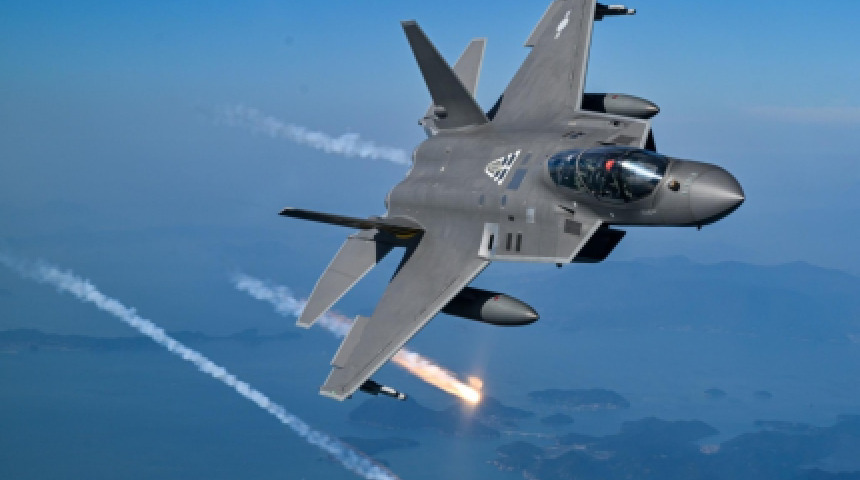
KF-21(圖片取自韓國空軍官網)
Korea Takes Delivery of First Homegrown KF-21 Fighter
韓國正式接收首架量產型KF-21「獵鷹」(Boramae)戰機,象徵該國規模最大的國產戰鬥機計畫,正式由研發與測試階段邁向實際作戰運用。首架量產機於9月22日由韓國航空宇宙產業(KAI)泗川廠區飛抵醴泉空軍基地,並由FA-50輕型戰機以及TA-50、T-50教練機伴飛,南韓空軍預計於2027年成立首個KF-21作戰單位。
South Korea has taken delivery of its first production KF-21 Boramae fighter, marking the transition of the country’s largest indigenous combat-aircraft programme from development and testing into operational service. The aircraft flew from Korea Aerospace Industries’ Sacheon facility to an Air Force unit at Yecheon on 22 September, accompanied by an FA-50 light combat aircraft and TA-50 and T-50 trainers. The Republic of Korea Air Force plans to establish its first operational KF-21 unit in 2027.
首架量產機正式交付 研發計畫告一段落
First Production Aircraft Delivered as Development Programme Concludes
此次交機與首飛消息由南韓聯合新聞通訊社引述南韓空軍及防衛事業廳(DAPA)聯合聲明報導。KF-21於2024年6月進入量產階段,並於2026年完成研發計畫;首架原型機則早在2021年4月正式亮相。隨著首架量產機交付,KF-21正式進入南韓空軍作戰體系。
The delivery and first flight of the production aircraft were reported by Yonhap News Agency, citing a joint statement from the Republic of Korea Air Force and the Defense Acquisition Program Administration. The KF-21 entered production in June 2024 and completed its development programme in 2026, following the rollout of its first prototype in April 2021. The September handover now marks the fighter’s formal entry into the ROKAF operational structure.
南韓空軍已於今年6月重新啟用第156戰鬥機中隊,作為KF-21的操作單位。該中隊過去曾操作F-4E「幽靈II」戰鬥機,約14年前解編,如今隨著KF-21服役重新編成。
The ROKAF reactivated the 156th Fighter Squadron in June to operate the KF-21. The unit previously flew the F-4E Phantom II before being disbanded approximately 14 years ago and has now been re-established as part of the transition to the new fighter.
從國產戰機構想到超音速戰鬥機
From Indigenous Fighter Concept to Supersonic Combat Aircraft
南韓於2015年12月正式啟動KF-21研發計畫,最初由印尼參與合作,但南韓自行研製戰鬥機的構想,其實可追溯至2001年時任總統金大中的國防產業發展構想。KF-21的主要任務之一,是逐步取代已退役的F-4「幽靈II」以及逐漸老化的F-5戰鬥機。「Boramae」一名在韓文中意為「幼鷹」,象徵新一代國產戰機。
South Korea formally launched the KF-21 development programme in December 2015 with Indonesia as a partner, although the concept of developing an indigenous fighter dates back to an initiative announced by then-president Kim Dae-jung in 2001. The programme was designed in part to replace the retired F-4 Phantom II and ageing F-5 fleets. The name “Boramae” means “young hawk” in Korean, reflecting the aircraft’s role as a new-generation indigenous fighter.
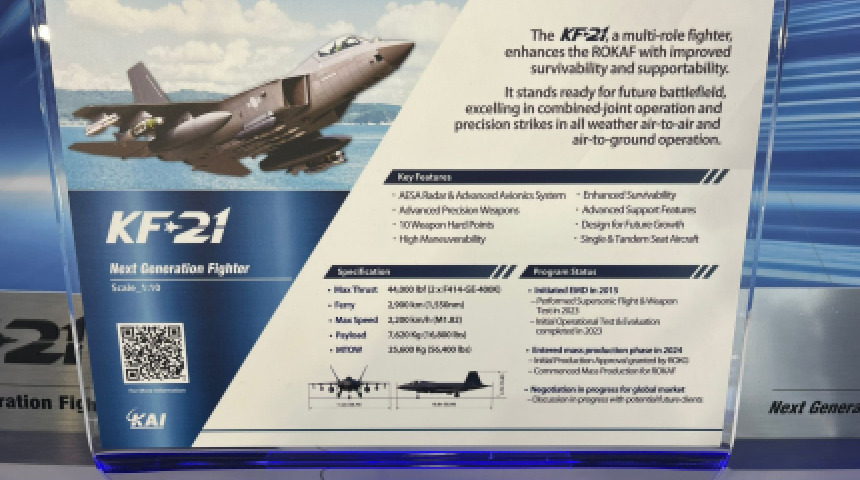
韓國航空宇宙產業將KF-21定位為4.5代多用途戰鬥機,採雙發動機設計。初期Block I型號主要著重空對空作戰能力,後續Block II則將進一步擴充對地攻擊能力,使KF-21逐步具備更完整的多用途作戰性能。
Korea Aerospace Industries describes the twin-engine KF-21 as a 4.5-generation multirole fighter. The initial Block I configuration is primarily focused on air-to-air missions, while the subsequent Block II configuration is intended to introduce expanded air-to-ground capabilities and provide a broader multirole combat capability.
關鍵航電與電戰系統走向國產化
Key Avionics and Electronic Warfare Systems Developed Domestically
KF-21計畫也促使南韓國防產業加速建立自主技術。由於美國政府未同意轉移包括主動電子掃描陣列(AESA)雷達及電子戰系統在內的4項關鍵技術,南韓產業界因此投入資源自行開發相關系統。
The KF-21 programme also accelerated the development of indigenous defence technologies in South Korea. After the US government declined to transfer four key technologies, including those related to the active electronically scanned array (AESA) radar and electronic warfare system, South Korean industry undertook the development of these capabilities domestically.
其中,韓華負責開發KF-21的AESA雷達,LIG Nex1則負責電子自衛系統。武器方面,KF-21初期空對空武器包括MBDA「流星」(Meteor)超視距空對空飛彈,以及Diehl Defence的IRIS-T短程空對空飛彈。
Hanwha developed the KF-21’s AESA radar, while LIG Nex1 developed its electronic self-defence suite. The fighter’s initial air-to-air weapons include MBDA’s Meteor beyond-visual-range air-to-air missile and Diehl Defence’s IRIS-T short-range missile.
首架量產型KF-21在今年5月取得作戰適用性認證,並於6月完成系統研發程序,隨後進入正式交付階段。這也代表KF-21已由原型機測試逐步轉向實際部隊運用。
The first production KF-21 was delivered after the aircraft received combat suitability certification in May and completed systems development in June. The milestone marks the fighter’s progression from prototype flight testing toward operational deployment with the South Korean Air Force.
120架生產規模 分Block I、II兩階段部署
120 Aircraft Planned in Two Production Blocks
南韓目前規劃生產120架KF-21,分為兩個主要生產批次。KAI預計在2028年前交付首批40架Block I戰機,主要執行空對空作戰任務;後續80架Block II則將進一步強化對地作戰能力,預計持續生產至2032年。
South Korea plans to build a total of 120 KF-21 fighters in two main production blocks. KAI is expected to deliver the first 40 Block I aircraft by 2028, with these fighters primarily configured for air-to-air missions. A further 80 Block II aircraft with expanded air-to-ground capabilities are planned through 2032.
南韓空軍預計2027年完成首個KF-21作戰單位的部署。未來KF-21將與F-35A、F-15K及KF-16等戰機共同構成南韓空軍的主力戰鬥機隊,逐步接替老舊機型所留下的任務缺口。
The South Korean Air Force expects its first KF-21 unit to be ready for deployment in 2027. The fighter will operate alongside the F-35A, F-15K and KF-16, forming part of the ROKAF’s core combat-aircraft fleet and gradually taking over missions previously assigned to older aircraft.
南韓推進國產長程空對空飛彈
South Korea Advances Indigenous Long-Range Air-to-Air Missile
除了KF-21本身,南韓也正推動武器系統自主化。南韓已啟動總額約1.9兆韓元、約14億美元的國產長程空對空飛彈研發計畫,預計供KF-21搭載使用。目前由韓華航太,以及現代Rotem與LIG Nex1組成的團隊競爭研發案,韓國國防科學研究所預計於10月選出優先談判對象,並在2026年底前完成相關決定。
Beyond the fighter itself, South Korea is also pursuing greater domestic control over its weapons systems. The country has launched a 1.9 trillion won, or approximately $1.4 billion, programme to develop an indigenous long-range air-to-air missile for the KF-21. Hanwha Aerospace and a Hyundai Rotem-LIG Nex1 team are competing for the programme, with the Agency for Defense Development expected to select a preferred bidder in October and complete the decision by the end of 2026.
這款新型飛彈預計採用涵道式衝壓發動機,基本推進概念與目前由KF-21使用的「流星」飛彈相近。南韓現階段仍需進口Meteor,但若未來完成國產長程空對空飛彈,將可提高對武器生產、性能修改及後續整合的自主掌控程度。
The planned missile is expected to use ducted ramjet propulsion, broadly similar to the propulsion approach employed by the Meteor. South Korea currently imports the Meteor for the KF-21, while an indigenous long-range missile would provide greater domestic control over production, modification and future integration.
目前尚未公布這款國產飛彈最終將整合至KF-21的哪一個生產批次。按照現行時程,飛彈研發預計持續至2033年12月,時間點將晚於40架Block I及規劃中的80架Block II戰機完成交付。
It has not yet been disclosed which KF-21 production block will ultimately carry the indigenous missile. Under the current schedule, missile development is expected to continue until December 2033, placing completion after deliveries of both the 40 Block I aircraft and the planned 80 Block II fighters.
從研發測試邁向實戰部署
From Development and Testing to Operational Deployment
9月首架量產KF-21正式交付,代表南韓這項歷經多年研發的國產戰鬥機計畫進入新階段。接下來,南韓空軍將著重於首個KF-21中隊的成軍與作戰部署,並隨著Block I、Block II持續交機,在本世代結束前逐步擴大KF-21機隊規模。
The September delivery of the first production KF-21 marks a new phase for South Korea’s long-running indigenous fighter programme. The next stage will focus on establishing the first operational KF-21 squadron and expanding the fleet as Block I and Block II aircraft are progressively delivered through the end of the decade.

回應文章建議規則: